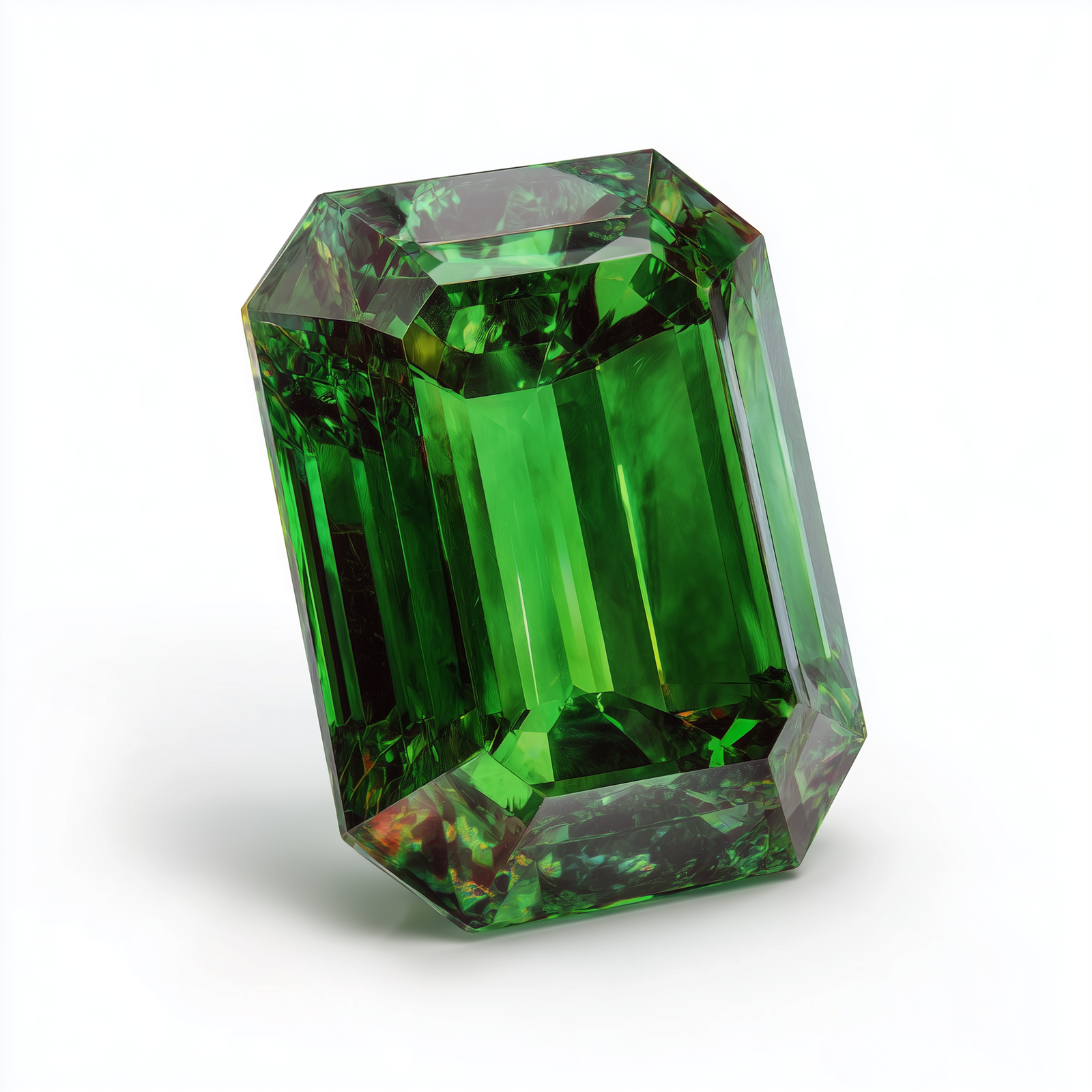
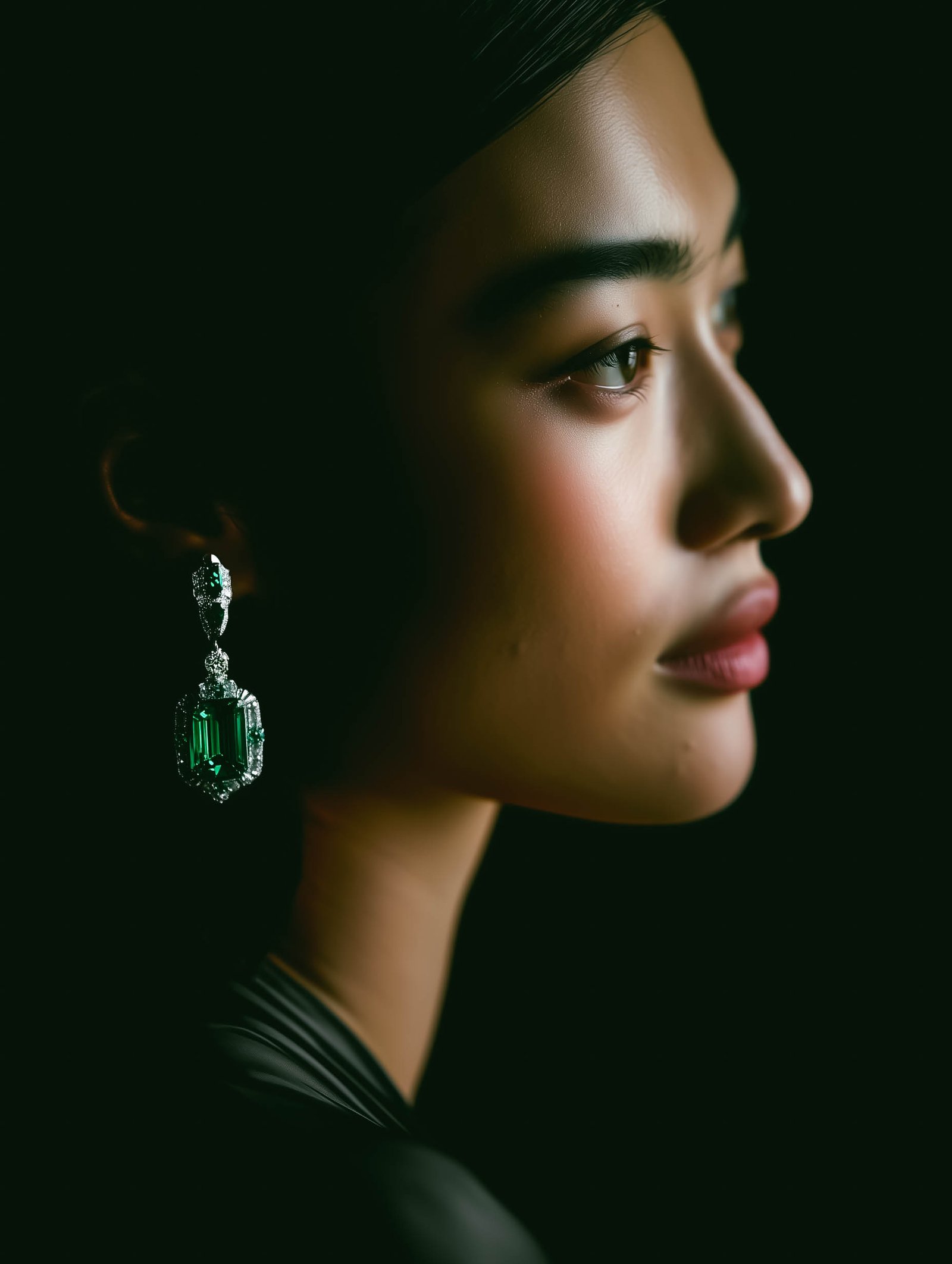
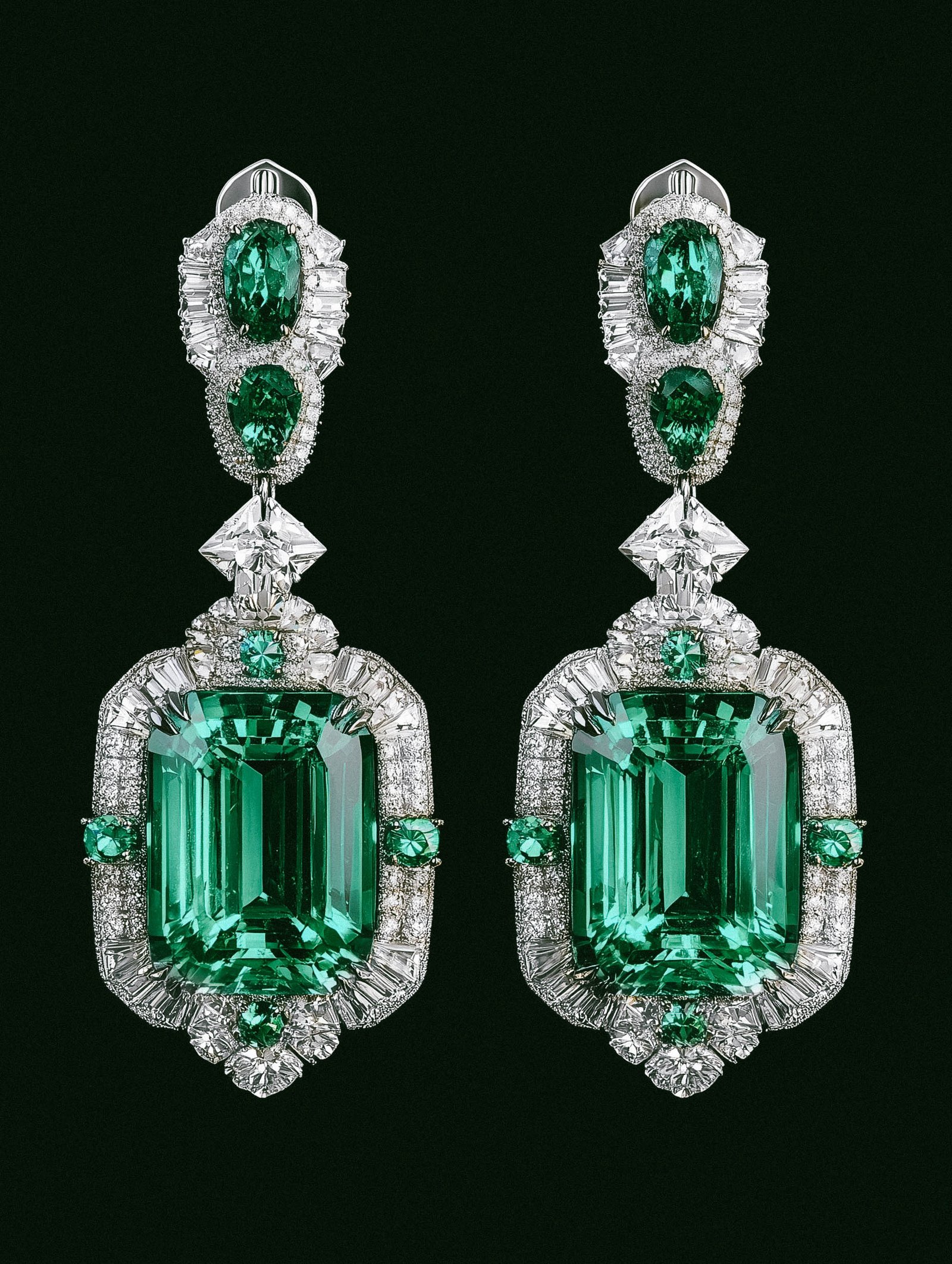
The center emeralds: Sourced from Muzo, Colombia—the source that produces the world's most coveted emeralds. These aren't just large; they're vivid. In gemological terms, that's the highest saturation grade possible. Most emeralds this size show visible inclusions (the "jardin" or garden effect). These are exceptionally clean to the naked eye, with only minor characteristic inclusions visible under 10x magnification.
The color? That rare "Muzo green"—not too blue, not too yellow, but that perfect grass-meets-forest tone with a slight blue secondary hue. It's the color empires were built on, the green Cleopatra obsessed over, the shade that makes even seasoned gem dealers pause.
Why emerald-cut for the centers? This Art Deco step-cut isn't just aesthetic—it's strategic. Emeralds are relatively soft (7.5-8 on Mohs scale), and the emerald cut minimizes stress on the stone while maximizing that hypnotic "hall of mirrors" effect inside the gem. Every facet becomes a window into the stone's depth.
The shield-cut diamonds: These rare cuts (also called "kite cuts" or "trapezoids") are nearly impossible to source in matched pairs above 2 carats. These sit between the top emeralds and the bottom drops, creating a visual bridge that draws the eye downward. Their geometric form echoes Art Deco architecture—sharp, angular, decisive.
The baguette frame: 34 tapered baguettes, each individually cut to fit its exact position in the frame. This isn't mass-production—each baguette was calibrated for its spot, creating that seamless geometric halo. In sunlight, these throw linear flashes of light that contrast beautifully with the round brilliants' sparkle.
The emerald accents: Eight smaller rounds and six ovals, all sourced from the same Muzo mine to ensure color consistency. Matching emeralds across 16 stones is an exercise in patience—emeralds vary wildly in tone even from the same source. These were selected over seven months to achieve perfect color harmony with the centers.